For decades, the worst part of buying a co-op in Bay Ridge wasn't the paperwork. It was the silence afterward. You'd submit a board package on a six-story building along Shore Road, and then wait. No timeline, no update, sometimes no explanation if the answer finally came back no. That changed on July 28, 2026, when New York City's new Cooperative Application Timeline Law took effect and put, for the first time, an actual clock on how long a co-op board can sit on your file.
If you're shopping for a co-op in Bay Ridge right now, or you've already got an accepted offer, this law directly affects your closing math. But the deadline solves a narrower problem than most people assume, and the gap between what it fixes and what it doesn't is exactly where a Bay Ridge deal can still stall.
The Clock, In Plain Terms
The law, formally Local Law 58 of 2026 and known during its legislative life as Intro 1120-B, applies to purchase applications submitted on or after July 28, 2026. It works in two stages.
| Clock | Length | What It Means |
|---|---|---|
| Completeness review | 15 days | The board or managing agent must confirm in writing whether your package is complete. No response in 15 days, and your application is automatically deemed complete. |
| Decision window | 45 days | Once your file is complete, the board must approve, conditionally approve, or deny within 45 days. |
| Summer recess | Varies | Boards can pause both clocks in July and August, but only if they adopt and publish a formal recess policy. |
Add it up and a Bay Ridge buyer is looking at roughly 60 days from initial submission to an answer, outside of recess. Boards that blow past the deadline face fines starting at $1,000 for a first violation, $1,500 for a second, and $2,000 for every violation after that, enforced by the city's Department of Housing Preservation and Development.
Why Bay Ridge Feels This More Than Most Neighborhoods
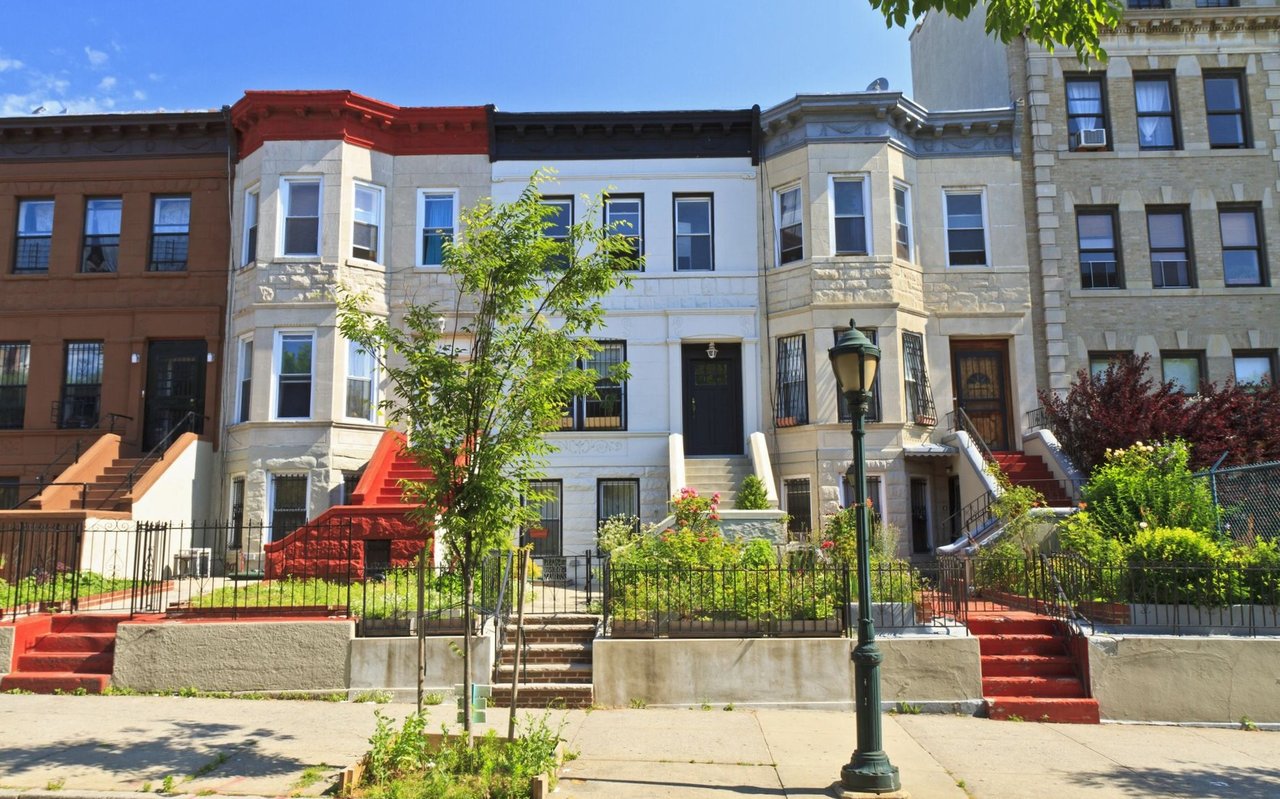
Not every Brooklyn neighborhood has the same stake in this law. Bay Ridge does, because it's one of the borough's most co-op-dense pockets, with a longtime local broker once putting the mix at roughly half co-op, half condo along Shore Road and Ridge Boulevard.
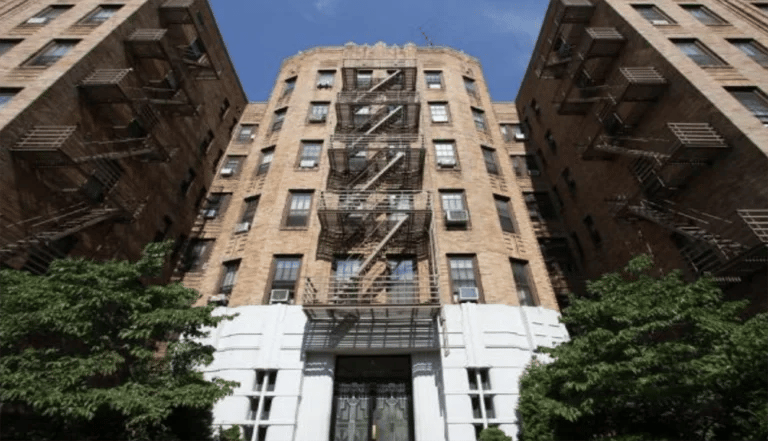
Walk that stretch and you're walking through the exact buildings this law targets. Lebern Towers at 9701 Shore Road is a six-story prewar co-op built in 1935, its Art Deco facade sitting directly across from Shore Road Park. A few blocks over, the Shore Ridge Apt. Corp. links two sister buildings, the Normandy from 1940 and the Brittany from 1953, which didn't actually combine into a single co-op corporation until 1986. Ridge Harbor, a 168-unit postwar building from 1950, is another.
Fairfax House, also built in 1940 and also six stories, is worth naming for the opposite reason. It's a condominium, which means this law doesn't touch it at all. Condo approvals in New York are already procedural and rarely involve a board vote on the buyer, so the new deadline was written for the co-op side of the street, which in Bay Ridge is most of the street.
What the Deadline Does Not Fix
Here's the part that surprises people. The law regulates how long a board can take. It says nothing about what a board can ask for, and it doesn't require a board to explain a denial. Two Bay Ridge buildings a block apart can still run completely different underwriting standards.
Across Brooklyn co-ops generally, buyers commonly need 20 to 25 percent down, though some buildings ask for as little as 10 percent and stricter ones push past 30 or even 50 percent. Housing costs typically need to land around 28 to 33 percent of gross monthly income, with total debt-to-income usually capped somewhere between 36 and 45 percent. Liquidity requirements swing even harder, from a few months of reserves at a relaxed building to one to three years' worth at a conservative one. None of that changed on July 28. A faster no is still a no, and a building with tighter reserve requirements will keep asking for them regardless of how quickly it now has to respond.
Before you sign a board package for a Bay Ridge building, it's worth asking your agent or attorney to confirm a few things upfront rather than finding out mid-review:
- How many residential units are in the building, since fewer than ten means this law doesn't apply to your timeline at all
- Whether the board has adopted and published a summer recess policy
- The building's actual down payment and liquidity minimums, which vary far more building to building than block to block
- Whether the unit is a sponsor sale
The Ten-Unit Question
That first bullet matters more in Bay Ridge than a lot of buyers expect. The law only covers cooperatives with 10 or more residential units. Condominiums, HDFCs, Mitchell-Lama developments, and any building under that threshold are exempt outright. Bay Ridge has plenty of small, boutique co-op conversions tucked among the larger elevator buildings on Shore Road and Ridge Boulevard, and a building's unit count isn't always obvious from a listing sheet. If you fall in love with a small building, ask the number before you assume the new deadline protects you, because it might not.
If You're Applying Between Now and Labor Day
Anyone submitting a board package in Bay Ridge this month should read the recess clause twice. Co-op boards traditionally don't meet in July and August, and the new law lets them formally toll both the 15-day and 45-day clocks during that stretch, as long as the policy is documented and published. An application submitted in mid-August could see its 60-day window effectively paused until after Labor Day, even though the law is technically in force. If you're trying to coordinate a Bay Ridge purchase with a sale elsewhere, ask the managing agent directly whether the building has adopted a recess policy and when it ends. That single question can be the difference between planning around September and planning around November.
Why the Bay Ridge Median Won't Tell You Any of This
If you've been comparing Bay Ridge home prices across different sites, you've probably noticed the numbers don't agree with each other. PropertyShark reported a median co-op sale price of $327,000 in Bay Ridge as of January 2026. A market summary published in late May 2026 put the neighborhood's median asking price closer to $699,000. Another report citing December 2025 Redfin data put the median sale price at $865,000. None of these sources are wrong exactly. They're measuring different slices of a housing stock that runs from a $327,000 studio co-op to a semi-detached house asking nearly $2 million on a single street.
That spread is the real lesson for anyone using a neighborhood median to plan a co-op purchase. The number that actually determines your timeline and your qualifying bar isn't the Bay Ridge median. It's the specific building's unit count, its board's recess policy, and its liquidity requirement, none of which show up in a headline price.
Common Questions From Bay Ridge Co-op Buyers
If a board misses the 45-day deadline, is my application automatically approved? No. Earlier drafts of the bill included an automatic approval provision if a board went silent, but that language was removed before the final version passed. A missed deadline exposes the board to escalating HPD fines, not an automatic yes for you.
Does this law apply if I'm buying a condo in Bay Ridge instead of a co-op? No. The law specifically excludes condominiums, along with HDFCs, Mitchell-Lama buildings, and any co-op under 10 units. A building like Fairfax House, which is a condo, isn't covered.
Does the new timeline cover transfers other than a straight purchase, like inheriting a unit from a family member? Yes. The law covers board-approved transfers beyond outright sales, including trust transfers, gifts, family transfers, and estate transfers, which matters in a neighborhood with a lot of long-tenured shareholders passing units down.
If you're weighing a Bay Ridge co-op right now and want someone who can tell you which of these buildings actually run fast, which ones still take their time regardless of what the law says, and what a realistic board package looks like for the building you're eyeing, that's exactly the kind of hands-on read the team at GAMA Team gives every buyer. Get started today and let's figure out what your timeline actually looks like, building by building.
This article is general information, not legal, tax or financial advice. Consult a qualified professional about your situation.